How to cut through the noise? Kate Chambers from The Gaming Boardroom
Today, iGaming leaders are overwhelmed by information and analysis, yet must make critical business decisions quickly. We spoke with Kate Chambers, Founder of The Gaming Boardroom and former director and advisor at Clarion Gaming, about bridging the gap between insight and execution, leveraging AI, and why building the right relationships is just as important as having the right tools.
SLOTEGRATOR: Tell us more about The Gaming Boardroom. What inspired you to create it, and what sets it apart from other iGaming hubs?
Kate Chambers: The Gaming Boardroom came from a very specific frustration I kept hearing from people working in gambling operations. They were drowning in analysis, strategy papers, and industry news, but when their board told them, "enter Brazil" or "present our compliance risk to the CFO on Friday," they had nowhere to go to find practical help. No frameworks, no templates, no tools. Just more articles telling them what the trends were.
TGB was built to fix that gap. We're not a media outlet or a think tank. We're a practical professional toolkit, the frameworks, calculators, checklists, and playbooks that mid-level managers need to execute the decisions their boards have already made. Think Gartner for gaming, combined with a resource library you can actually use on Monday morning.
What sets us apart is simple: everything we publish has to pass what I call the Monday morning test. If an operator can't use it to do their job better the following Monday, it doesn't belong on the platform. That focus on execution over analysis is what makes TGB different.
S: You spent years building ICE into the most influential event in the industry. What is the main lesson it taught you about designing offline iGaming platforms?
KC: The biggest lesson was that people don't come for content; they come for confidence. Whether it's a conference or a professional platform, what people are really looking for is the feeling that they understand what's happening, they know what to do next, and they won't be caught off guard.
At ICE, the sessions that always filled up weren't the prestige keynotes. They were the ones where someone stood up and said, "here's the problem, here's what we did, here's what worked." Practical, honest, specific. That shaped everything about how TGB is designed.
The other lesson: transformation in this industry, whether in a business or in a professional's career, requires real support structures, not just inspiration. Events can inspire. But the work happens afterwards. TGB is designed for that "afterwards" moment.
S: For years, trade shows have been the main way to make business connections in iGaming. In a digital-first world, are they still important, and how do you see their role evolving?
KC: They're still important, but their role is changing. Trade shows have always been about relationships, and relationships haven't gone digital, even if everything else has. The energy of being in a room with your industry, reading the room, having the conversations that don't happen on a Zoom call, that still has real value.
But I think we're entering a phase where offline events need to reinvent themselves, just like the businesses that attend them are reinventing themselves. The formats that worked 10 years ago, big halls, stand selling, passing business cards, feel increasingly out of step with how the industry actually operates now.
The events that will thrive are those that create genuine moments of professional development and connection, not just commerce dressed up as community. Smaller, more curated, more purposeful. And they'll complement digital platforms rather than try to be everything.
S: What do you think about more private and closed networking events? Do they have more commercial potential than larger trade shows?
KC: I think they serve a fundamentally different need, and yes, for the right audience, they can be more commercially valuable. When you gather 30 carefully selected people in the right room, the quality of conversation is completely different. Deals get done faster because trust is built faster. People speak more openly. You learn more.
The challenge is curation. A closed event is only as good as the decisions made about who's in the room. Get that wrong, and you've just created a smaller, more expensive version of the same experience.
For suppliers trying to reach operators, I'd say the most powerful combination right now is sustained digital presence, being visible where operators go when they need answers, plus selective, high-quality in-person moments. Neither alone is enough. Together, they're very powerful.
S: Which innovations are having the greatest effect on operators right now, and why?
KC: AI is the obvious answer, and it's genuine, not hype. But the impact isn't where most people expect it. It's not in customer-facing AI, at least not yet. It's in the operational layer. AI-assisted compliance monitoring, automated regulatory tracking, risk modelling: these are quietly transforming how operators manage complexity.
The operators who are benefiting most are those using AI to reduce the cognitive load on their teams. The volume of regulatory change, market intelligence, and competitive data that operators need to track is simply beyond what any individual can manage manually now. AI tools that filter, summarise, and flag what matters are genuinely game-changing for mid-level managers.
At TGB, we are building AI-assisted tools specifically for this: compliance alert systems, market intelligence monitors. The goal is always the same: give operators clarity faster, so they can make confident decisions rather than chasing information.
S: How should industry leaders distinguish between noise and what's genuinely important when making decisions?
KC: This is one of the most important questions in the industry right now, and honestly, most organisations haven't solved it. The volume of information is overwhelming, and the pressure to react to everything creates a kind of strategic paralysis.
My advice is to work backwards from decisions, not forwards from information. Start with: what decisions do I actually need to make in the next 30, 60, 90 days? Then filter everything through that lens. Information that doesn't inform a real decision is probably noise, however interesting it might be.
The second thing is to build your professional toolkit, so you're not starting from scratch every time. Organisations and individuals with strong frameworks, tested templates, and clear processes waste far less time on noise because they can move quickly when something genuinely matters. That's the core philosophy behind TGB. Preparation isn't just about knowledge; it's about having the right tools ready.
S: What will be the most important trends in the relationship between regulators and operators in the next few years?
KC: The direction of travel is clear: more regulation, more complexity, and more personalisation at a market level. The era of broadly consistent global frameworks is over. What we're seeing now is highly localised regulatory environments, each with its own requirements, timelines, and political dynamics.
For operators, this means compliance is becoming a genuine competitive differentiator. The companies that build strong regulatory capability, people, processes, and tools will move faster and more confidently into new markets than those treating compliance as a box-ticking exercise.
I also think the relationship between regulators and operators will gradually become more collaborative in mature markets, because both sides now understand that poorly designed regulation hurts players and businesses alike. But this will require operators to show up more proactively, bringing data, demonstrating responsible practice, and engaging in policy discussions rather than just responding to them.
S: Is the industry really becoming more proactive about responsible gambling, or is it being pushed by politics and regulation?
KC: Honestly? Both, and I don't think that's a bad thing. The initial driver in many markets was regulatory pressure, and it's important to be honest about that. But something genuine has shifted in the last few years. I'm seeing more operators build responsible gambling into their product philosophy rather than treating it as a compliance obligation. That's a meaningful change.
The companies leading on this have realised it makes commercial and ethical sense. Sustainable revenue comes from sustainable players. Operators who protect customers build better long-term businesses.
That said, there's still too much variation across the industry. Progress is real, but it's uneven. The benchmark should be the best operators, not the average ones, and we're not there yet.
S: How challenging has it been to be a woman in charge in such a competitive field? Have you noticed real changes in the number of women in top executive positions?
KC: It has been challenging at times, and I won't pretend otherwise. There have been rooms where I've had to work harder to be taken seriously, and conversations where I've been more aware of my gender than I should have had to be. That's just honest.
But I've also been fortunate to work with many people, men and women, who judged me on what I delivered. Building ICE over 15 years taught me that credibility comes from doing excellent work consistently, and that eventually cuts through most barriers.
Are there more women in senior positions now? Yes, noticeably. But the numbers at the very top still don't reflect the talent in the pipeline. The industry has more women in middle management than ever, but the conversion into boardrooms and C-suites is still a gap. Closing it requires active intention, not just hoping the pipeline will eventually flow upwards on its own.
S: What advice would you give to young professionals aspiring to become leaders in iGaming? What three things should they prioritise?
KC: Three things I'd tell anyone early in their career in this industry:
First, build genuine expertise in something specific. The industry rewards people who actually know how things work, whether that's regulation, product, technology, or commercial operations. Being broadly interested is not enough. Go deep somewhere.
Second, make yourself useful to people making decisions. The fastest route to the boardroom is being the person the boardroom relies on. That means doing the hard work of preparation, understanding your numbers, having frameworks ready, and not winging presentations. Every time you walk into a room prepared when others aren't, you advance.
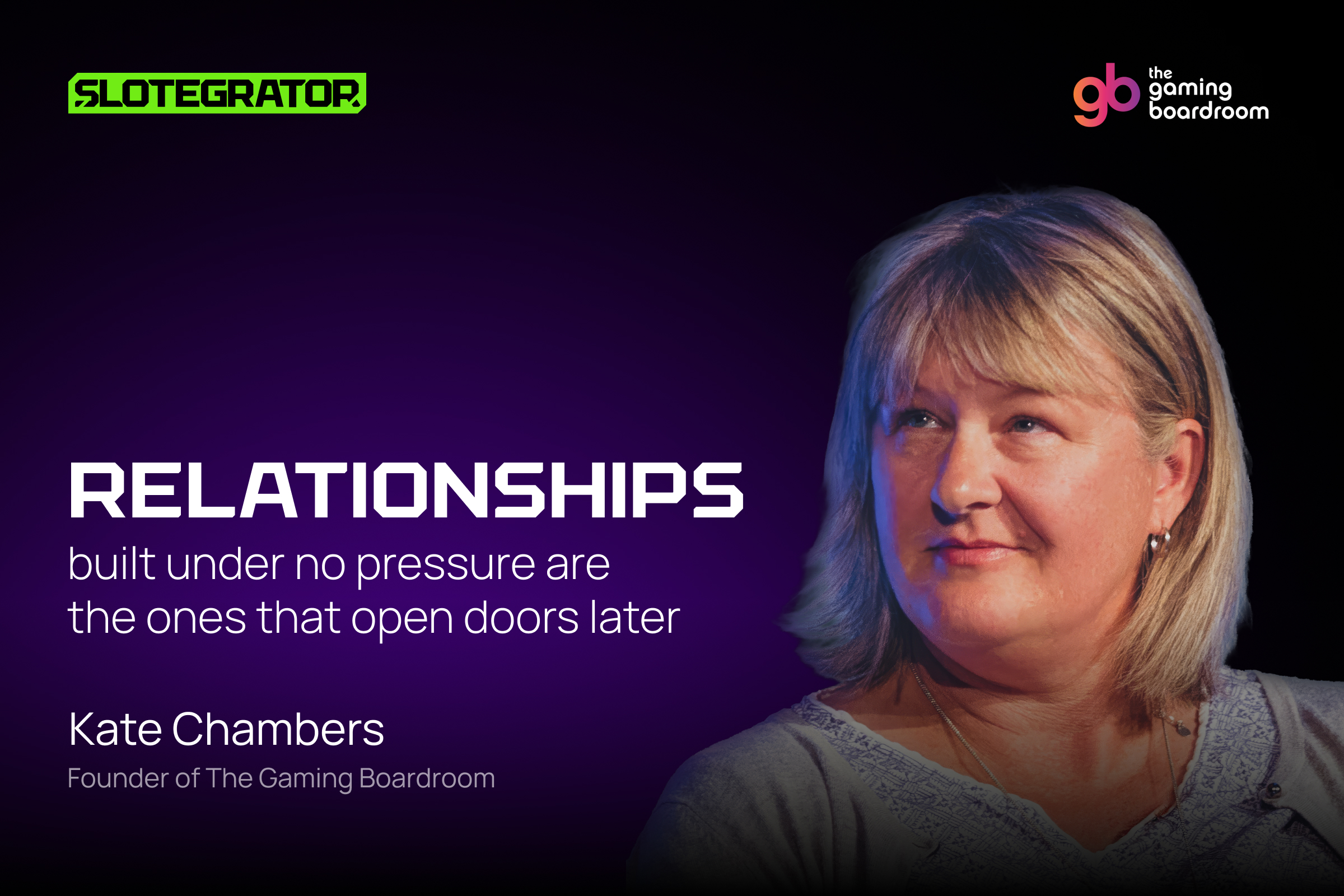
Third, invest in your network before you need it. Relationships built under no pressure, when you're not asking for anything, are the ones that open doors later. The iGaming industry is smaller than it looks, and reputation travels fast in both directions.
And as for qualities that matter now: intellectual honesty, adaptability, and the ability to be calm under pressure. The industry is in a period of real transformation, in technology, in regulation, in consumer behaviour. The leaders who will succeed are those who can help their teams navigate change without losing strategic focus. Balance in team, in product, and in direction, that combination is genuinely rare and genuinely powerful.
