Gambling compliance: why compliance is becoming part of the iGaming product
Compliance can no longer be an afterthought in this highly regulated iGaming industry. Regulatory requirements dictate not only which markets an operator can enter, but also the products themselves, including data collection, software design, advertising and much more.
This is why gaming compliance is no longer just about having “papers in order” and proving that a product meets the rules. It is about embedding regulatory requirements into product, technical, operational and commercial strategies from the start. This is how iGaming compliance becomes part of the product lifecycle – and a factor in a business's ability to enter and operate in regulated markets.
What gambling compliance covers in iGaming
In this industry, gaming compliance means meeting the legal and regulatory requirements that apply to a business, its products and its operations in each market.
Gambling compliance is much broader than Anti-Money Laundering (AML) and Know Your Customer (KYC) protocols. A regulated iGaming product can be affected by licensing conditions, player and data protection requirements, information security, game fairness, certification, recordkeeping, regulatory reporting and ongoing regulatory compliance monitoring.

The exact requirements depend on the jurisdiction, license and product. For example, the UK Gambling Commission's License Conditions and Codes of Practice (LCCP), effective from 29 July 2026, cover areas such as technical standards, gambling software, AML and KYC, fair and open provisions, information requirements and customer protections. The Commission also treats compliance as an ongoing responsibility rather than a one-time approval.
| Compliance area | What it includes | How it affects the product |
| Licensing and regulatory requirements | License conditions, technical standards and market restrictions | Product scope, available functionality and market entry |
| AML/KYC and player protection | Verification, monitoring and responsible gambling controls | Player flows, limits, account logic and data collection |
| Data, security and recordkeeping | Data storage, access control and audit trail | Architecture, logs and security controls |
| Game fairness and certification | Random Number Generators (RNG), Remote Gaming Server (RGS) and platform testing where applicable | Game logic, certification scope and release process |
| Reporting and monitoring | Regulatory reports, evidence and regulatory change monitoring | Reporting layer, integrations and operational workflows |
This is why compliance needs to be incorporated into planning from the outset. What might appear to be a purely legal requirement may have a direct impact on the product and its marketing strategy.


Why compliance needs to enter the product lifecycle early
New products take a long time to develop and they need to get certified before they can hit the market. A compliance review may reveal that the intended market requires specific customer records, data retention periods or technical controls that the product does not have.
For example, operators in the UK are required to give customers access to their gambling and account history. This means that platforms and games need to capture the relevant data, store it for the required period and make it accessible to the customer in the required format.
Regulations are mandatory, and the consequence for failing them is additional work: issues identified late in the process can mean redesigns, additional development cycles, testing and delays. But the regulations themselves aren’t at fault here — it’s a strategic mistake on behalf of the business.
In order to stay ahead of schedule, advanced regulatory compliance processes need to be in place prior to development.
Regulatory compliance checklist:
- Monitor: Track new and changing regulatory requirements in your target market.
- Identify: Determine which requirements apply to your product.
- Assess impact: Evaluate what the regulations mean for architecture, functionality, documentation and certification.
- Implement: Assign owners and convert requirements to product and technical tasks.
- Track and audit: Verify implementation and retain evidence for certification or audits.
A well-designed casino platform builds logging, reporting and access control into its core architecture. Infrastructure such as APIgrator can also accommodate the data, integration and monitoring requirements of regulated markets.

Meanwhile, late-stage compliance can cause:
- Architectural changes
- Extra development and testing
- Delays in certification
- Inadequate documentation
- Increased cost of launch
Looking for discrepancies between regulations and products early on can flag potential issues while there's still time to engineer around them.
Mature regulatory compliance management requires co-ordination between the compliance, product, legal, technical and commercial teams. The earlier these teams are on the same page, the fewer opportunities there are for surprises at the end of the development cycle.
Why gambling compliance requirements differ by jurisdiction
Around the world, iGaming markets have similar priorities when it comes to global regulatory compliance, such as player protection, ensuring game integrity, securing information, accurate financial calculations and making relevant activity auditable.
However, practical implementation can differ substantially.
One jurisdiction may require the online casino platform to be certified, while another might want an in-depth investigation of the RNG, RGS, individual games and payment systems. Reporting formats, data retention, technical integrations and player-protection controls can also vary.
| What may differ | Examples | Product impact |
| Licensing requirements | Game, RNG, RGS, platform or integration testing | Development and release cycle |
| Data and recordkeeping | Retention periods, audit records and local requirements | Storage, logs and data models |
| Reporting | Format, frequency and mandatory fields | Reporting modules and integration |
| Player protection / AML | Controls, thresholds and monitoring requirements | Player account databases |
| Technical integrations | Connections to external or regulatory systems where required | API and infrastructure design |
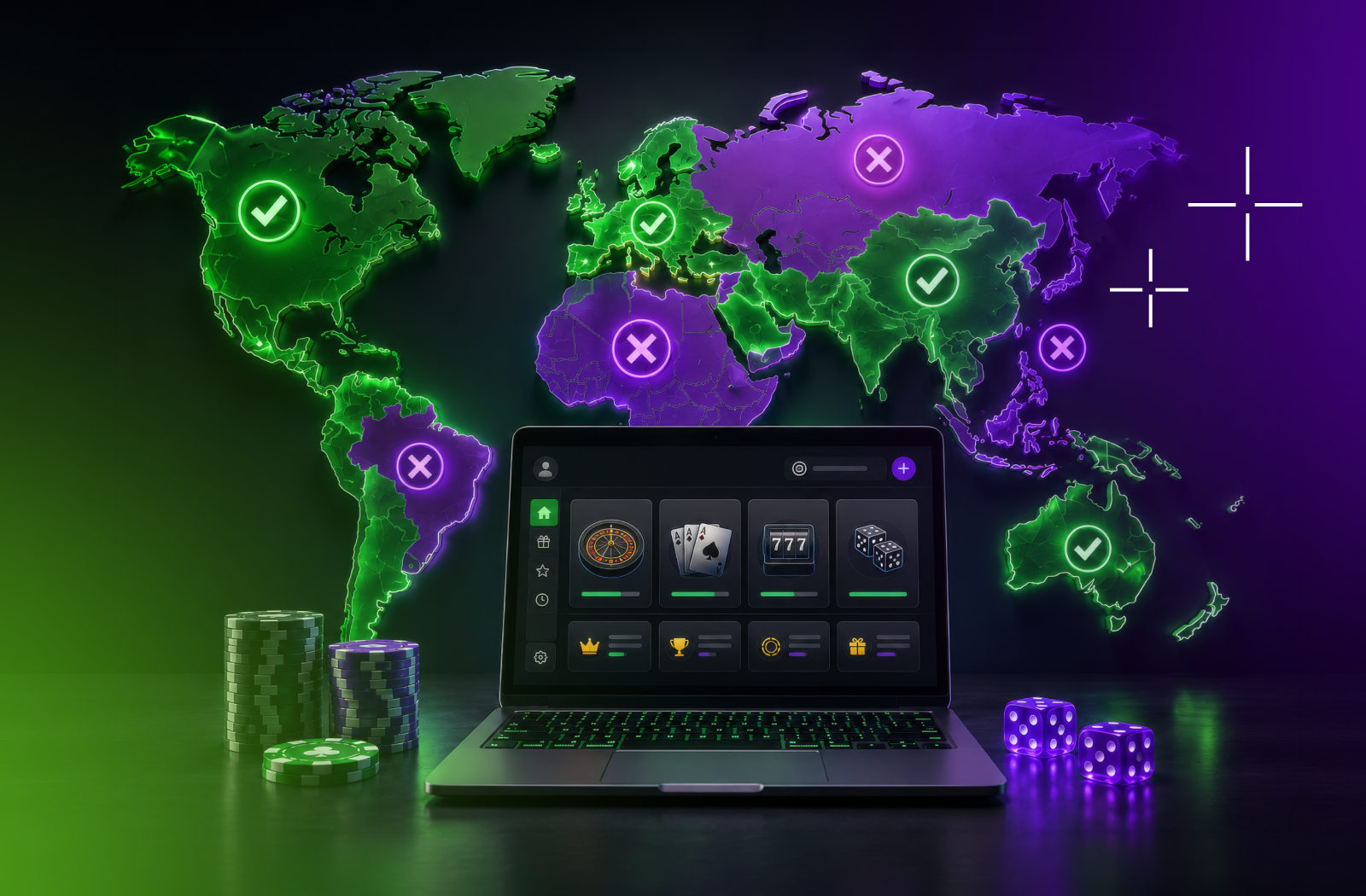
Operators and providers cannot assume that a technical setup or product built for one market will work everywhere else. Regulatory requirements vary by jurisdiction because each market, country and region set their own rules for player protection, reporting, data, payments, advertising and technical controls. For example, the UK will allow operators to advertise slot games using animals and mascots, as long as they don’t overwhelmingly appeal to children; but in Belgium, characters are prohibited from being shown at all.
On a more technical note, in Germany, licensed online gambling providers must connect to the Interstate Gambling Evaluation System (LUGAS), the central regulatory system used to monitor requirements such as cross-operator deposit limits and player activity; and to OASIS, the national player exclusion system.
Meanwhile, operators offering online gambling in Latin America need to be aware of all the ways that regulations may differ within one country, and why this can happen.

Compliance doesn’t stop once these integrations are in place: it’s an ongoing process. Regulatory frameworks can change, and new requirements are often introduced. This means that teams should continuously monitor regulatory changes, assess their impact and update the product if necessary.
The consequences for violating the rules can be very serious. Organizations and executives can face fines, financial losses, license suspension and, in some cases, even imprisonment. A clear regulatory compliance workflow helps companies identify requirements and address issues before they lead to violations.
How regulation shapes iGaming product architecture
Once compliance becomes part of product development, regulation stops feeling like a separate part of the process and becomes a visible pillar in the technical architecture. Regulatory compliance technology helps turn these requirements into practical controls, automated checks, reporting workflows and monitoring systems built directly into the product.
Data and recordkeeping
A regulated product must know what information it generates, where that information is stored, how long it is retained, who can access it and whether it can be retrieved when evidence is required.
This affects database design, retention logic, permissions and the way information moves between systems.
Event logs
Logs can be essential for reconstructing what happened. Depending on the product and applicable requirements, this may include game events, configuration changes, access activity, errors and other system events.
The objective is not just to collect as much data as possible, but to ensure that relevant events can be reliably reconstructed when an incident, dispute, certification review or regulatory assessment requires it.
Game-round and transaction integrity
A game round may include different events: wager, outcome, win and balance update. In rare instances, they can also experience interruptions, cancellations or errors.
Therefore, the system needs to maintain a reliable connection between these events. The same principle goes for financial transactions: the technical record should make it easy to understand exactly what happened and identify inconsistencies.
Technical standards can make these concerns explicit. For example, GLI-19 is a widely used technical standard for interactive gaming systems and addresses areas including operational audits, security controls, systems that process sensitive information and components responsible for generating game outcomes.
Security and access control
Regulatory security compliance is not just a policy document. Controls need to exist in the system and be demonstrable.
Access permissions, authentication, monitoring, incident handling and evidence of security controls can all become relevant to the compliance assessment. GLI-19, for example, includes an operational review of technical security controls and processes that cover critical system components and sensitive information.
Reporting and integrations
Regulatory reporting may require structured information, specific fields and integration with external systems where applicable.
This makes reporting a product and infrastructure consideration, not just an administrative activity; if the data is not captured correctly at source, then it may be difficult or impossible to generate an accurate report if it is needed later.
Certification
The certification itself should be considered in the release lifecycle. A material change to a certified component may have implications for testing, documentation or approval depending on the applicable framework.
Product and Technical teams should have a clear understanding of not only what is certified, but also what changes may impact the scope of certification.
Operator vs supplier compliance responsibilities
Compliance responsibilities are not the same for operators and technology providers. They vary depending on the jurisdiction, licensing and contractual model — but the biggest difference will be between the business models themselves.
| Area | Operator | Supplier/technology provider |
| Player relationship | Registration, KYC/AML, payments, responsible gambling and complaints | Support added to products and integrated where applicable |
| Product integrity | Uses approved or certified products under its license conditions | Maintains the integrity and certified operation of supplied components |
| Data & incidents | Player, account and payment context | Game, server, technical logs and product data |
| Regulatory response | Primary license-holder communication | Technical evidence, certification documents and investigation support where applicable |
The overlap in casino compliance becomes most visible when something goes wrong.
If a player disputes a game result, the operator may have the player’s account and transaction data, while the game supplier holds the round records and technical logs. Resolving the dispute requires both sides to provide the right evidence.
That makes clear roles and procedures essential. Contracts and technical processes should define who owns the data, who investigates incidents, how information is shared and how evidence is retained for regulatory review.
The principle is reflected in many regulatory frameworks. For example, in the UK, the Gambling Commission states that licensees remain responsible for their contracted third parties and they must have sufficient oversight and controls over those relationships.
It is therefore essential for suppliers to include regulatory compliance support within their propositions. An IT partner that can easily document its offerings, provide efficient technical answers and facilitate certification will minimize problems for the operator later down the line.
Regulatory compliance and risk management: a commercial advantage
Compliance is often seen as a cost risk because failures in this space can lead to regulatory, technical and financial sanctions. But well-organized compliance also creates significant commercial value.

The first benefit is predictability. If regulatory requirements are identified early in the development process, the commercial team can evaluate the viability of a target market, assess necessary product modifications and identify certification dependencies that could affect the product development schedule.
The second is reduced risk for the operator. Working with a supplier that can provide clear documentation, technical evidence and structured support for regulatory compliance makes evaluation and integration easier.
The third is market expansion. Meeting the requirements of a new regulated jurisdiction does more than just create another compliance certificate. It can make a product commercially viable in a new market and unlock opportunities for sales, account management, finance, legal and technical teams.
A mature compliance function therefore contributes to:
- Fewer late-stage technical surprises and less reworks
- Clear ownership and audit trails
- More predictable licensing and launch timelines
- Lower integration and regulatory risk for operators
- Faster assessments for new regulated markets
- Stronger supplier credibility and partnership readiness
This changes the fundamental question gambling compliance is expected to answer. Its role is not simply to say “no” to hopeful operators and providers — it is to provide clear conditions under which the regulators can say “yes.”
Compliance is becoming part of the product
The development of serious gaming compliance is a sign of a shift in the regulated industry. Regulatory requirements are becoming increasingly linked with technology, data, security, certification and product operations.
Consequently, a compliance professional should know more than just laws. They should be able to turn regulatory requirements into decisions and align these with the expectations from product, engineering, legal, and commercial teams.
And that is exactly what makes compliance a product capability.
A product that is designed from the outset for a regulated market is easier to assess, test, document and adapt than a product that needs to be retrofitted for compliance just before launch. In that sense, strong compliance is not a barrier between product and market. It helps to build the route between them.
A turnkey casino solution can provide this foundation by incorporating compliance-ready features and controls into the product from the start. This gives operators a more structured way to adapt the platform to the requirements of different regulated markets.
For iGaming companies operating across regulated markets, that route can become a competitive advantage, as a product designed for compliance is much better equipped to handle changes.
Our Compliance team works across over 60 regulated jurisdictions worldwide, staying on top of regulatory developments every day. Let our expertise work for your next market.
FAQ
What is gambling compliance in iGaming?
Gambling compliance covers the regulatory, technical and operational requirements an iGaming business must meet. It often includes licensing, player protection, AML/KYC, security, certification, data management, reporting and ongoing regulatory monitoring.
Why should compliance be involved in product development?
Regulatory requirements can affect product architecture, data, logs, integrations, functionality, and certification. Identifying them late can cause rework, additional QA and launch delays. Early involvement converts regulatory requirements into planned product and technical tasks.
How do gambling compliance requirements differ by jurisdiction?
The principles may be similar at their core, but implementation in practice varies. Markets can differ in certification scope, reporting, data requirements, player-protection controls and technical integrations. A configuration or certification used in one jurisdiction may not be good for another.
How does compliance affect iGaming product architecture?
It can influence what data is collected and retained, how events are logged, how game rounds and transactions are recorded, how access is controlled, and how reporting or regulatory integrations work. Compliance therefore becomes an architectural consideration.
What is the difference between operator and supplier compliance responsibilities?
The operator generally manages the player-and-license relationship, while the supplier supports the integrity and compliance of its technology. Responsibilities can overlap, particularly during incidents, audits and investigations, and may depend on the jurisdiction and contract.
Can strong compliance speed up market entry?
Yes. Early regulatory assessments can reveal technical, certification and documentation requirements before development is finished. This means less probability of late-stage surprises and makes launch dependencies and timelines easier to control.

Leave a comment